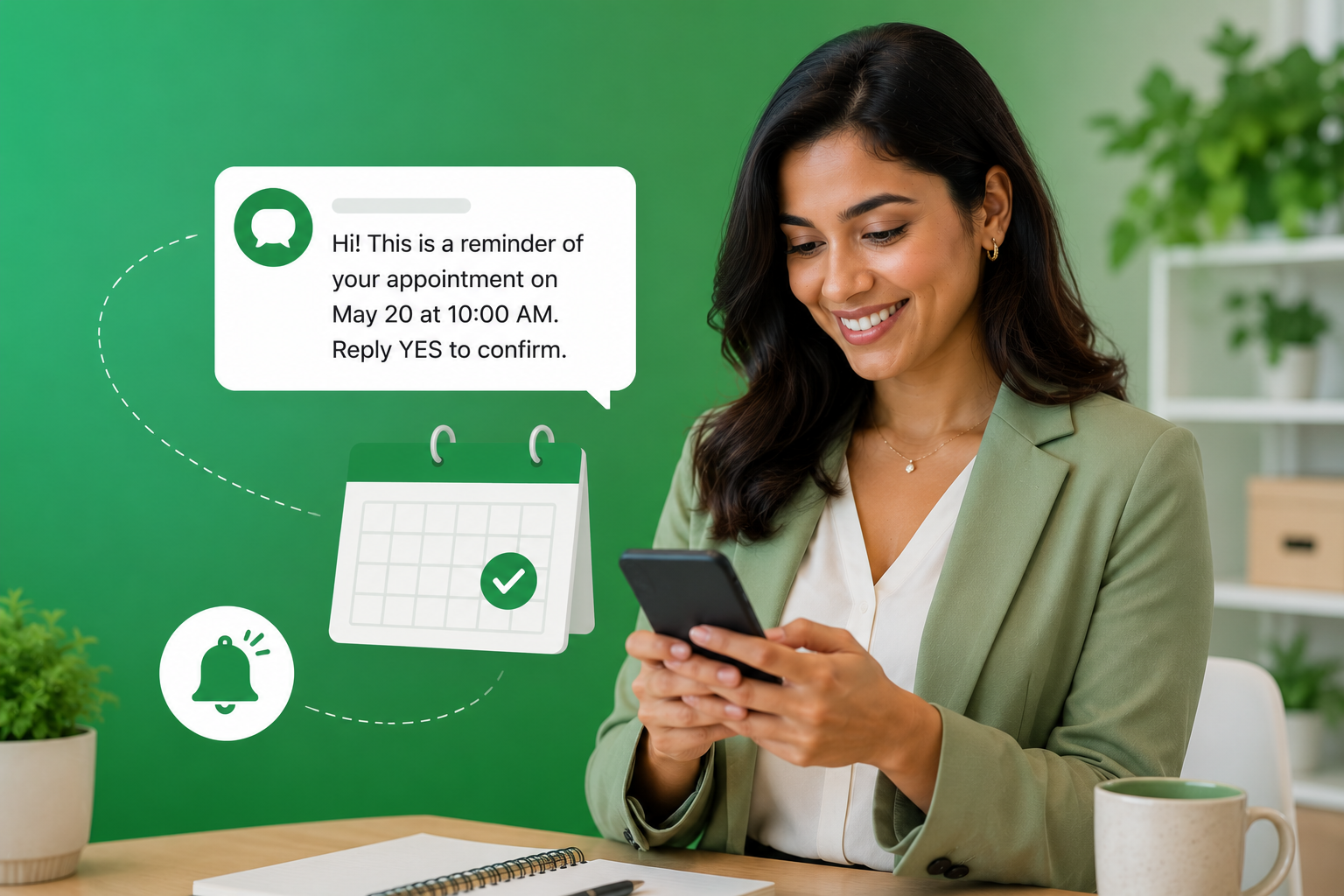

Political text message examples give campaigns a direct line to voters who screen calls and tune out mailers. The reach is already there: 98% of Americans own a cellphone, per Pew Research Center, and Americans exchanged nearly 2.2 trillion text and multimedia messages in 2024. Texting now sits at the center of voter contact. This guide gives you 10 political text message examples you can copy and adapt for any race, organized by campaign goal, plus how to write them well and stay compliant. For the strategy behind them, see our political texting best practices.
Why Political Text Message Examples Work for Campaigns
Texting reaches voters where their attention already is, and it does it faster and cheaper than canvassing or direct mail. The format also invites a reply, which turns one-way outreach into real dialogue.
Speed: A message about a deadline or polling change lands in seconds, not days.
Visibility: Texts surface on the lock screen instead of sitting in an unopened inbox.
Dialogue: Voters can reply to RSVP, ask a question, or take a quick poll.
Cost: Reaching thousands by text costs a fraction of mailers or paid media.
A platform that supports two-way conversations lets volunteers respond like humans, not bots.
10 Political Text Message Examples for Every Campaign Goal
Each example below maps to a specific campaign goal across the election cycle. Swap in your candidate, race, dates, and links, then save the winners as reusable templates.
1. Candidate introduction: “Hi [First Name], I’m [Candidate], running for [Office] in [City]. I’m focused on [Issue 1] and [Issue 2]. I’d be honored to earn your vote: [Link]. Reply STOP to opt out.”
2. Voter registration reminder: “Hi [First Name], the deadline to register in [State] is [Date]. It takes two minutes: [Link]. Make sure your voice counts this year.”
3. Get out the vote: “[First Name], polls are open today until [Time]. Find your polling place here: [Link]. Every vote matters, including yours.”
4. Early or mail-in voting: “Hi [First Name], early voting starts [Date] in [County]. Skip the Election Day lines and vote early: [Link].”
5. Fundraising ask: “[First Name], we are [Amount] from our goal, and every dollar is matched today. Chip in here: [Link]. Thank you for backing [Candidate].”
6. Volunteer recruitment: “Hi [First Name], [Candidate]’s team needs help knocking doors this weekend. Grab a shift: [Link]. Even two hours makes a difference.”
7. Event or rally invite: “[First Name], join [Candidate] this [Day] at [Venue], [Time]. RSVP here: [Link]. Bring a neighbor.”
8. Issue advocacy: “Hi [First Name], [Candidate] is fighting for [Issue]. Add your name to show support: [Link]. Your voice helps move this forward.”
9. Endorsement announcement: “[First Name], [Endorser] just endorsed [Candidate] for [Office]. Here is why it matters: [Link].”
10. Voter feedback poll: “Hi [First Name], what matters most to you this election? Reply 1 for [Issue], 2 for [Issue], or 3 for [Issue]. We are listening.”
To let supporters subscribe themselves, promote a text-to-join keyword on signs, flyers, and your website.
How to Write Campaign Texts That Convert
Strong political campaign messages share the same backbone, whether the goal is a donation or a door knock. Treat every campaign text as one idea, one ask, and one tap to act.
Identify yourself: Name the candidate or committee in the first line so the voter knows who is texting.
Lead with one ask: Limit each message to a single call to action with a clear link.
Personalize it: Use merge fields to insert names and districts, a core part of SMS personalization.
Time it well: Schedule sends around deadlines, debates, and voting windows.
Make opt-out easy: Include a STOP option in promotional messages.
Political Text Message Compliance: TCPA, 10DLC, and Consent
Campaign texting is regulated, and a misstep risks fines or carrier blocking. This is factual guidance, not legal advice, so confirm specifics with counsel. The governing rules come from the FCC and the Telephone Consumer Protection Act.
Know your method: Texts sent by an autodialer to cell phones generally require prior express consent, while manually sent peer-to-peer messages are treated differently.
Register 10DLC: Application-to-person sending over standard numbers requires 10DLC registration so carriers deliver your texts.
Collect consent: Where required, document opt-in consent and how each contact agreed.
Honor opt-outs: Process STOP requests immediately and keep records.
Respect timing: Keep outreach within reasonable local hours.
Run Your Campaign Texting on SendHub
Great messages need a platform built for volume and dialogue. SendHub gives campaigns the tools to reach voters and reply at scale.
- Send your full voter list in seconds with mass texting
- Run high-volume outreach on dedicated toll-free numbers
- Manage every voter reply from one shared inbox
- Let supporters opt in with custom text keywords
- Personalize at scale with saved templates and merge fields
- Track delivery and engagement with built-in analytics
FAQs
Yes, provided you follow FCC and TCPA rules. Specifically, identify the sender and offer an easy opt-out in every message.
It depends on how they are sent. Generally, automated texts to cell phones require consent, while peer-to-peer messages are treated differently.
Keep it under 160 characters when possible. That way, your message stays on one segment and reads quickly.
Begin early with introductions and registration reminders. Then, increase frequency as early voting and Election Day approach.
Usually, yes, for application-to-person sending over standard numbers. Otherwise, carriers may filter or block your messages.
Text around key moments rather than daily. Otherwise, over-messaging drives opt-outs and complaints.
Yes, merge fields insert names and districts automatically. As a result, each text still reads one-to-one.
Always include who you are, one clear ask, and an opt-out. Together, these keep messages compliant and effective.
Send relevant, well-timed messages to people who agreed to hear from you. Additionally, honor STOP requests immediately.